
Guide to Identifying the Right Cardboard Boxes to Optimise Packaging Solutions
Most businesses treat cardboard boxes as an afterthought. But selecting the right cardboard boxes cuts damage claims, reduces filler use, and trims your postage bill.
The old approach of ordering a pallet based on whatever fits, getting the goods out the door, and moving on works until a customer opens a crushed parcel, a courier adds a volumetric surcharge, or the warehouse runs out of stock on a Friday afternoon.
Choosing the right boxes deserves more thought than a rushed purchasing decision. Get the specification right, and you cut damage and costs. Get it wrong, and you pay for the mistake on every single dispatch. This guide sets out the decisions that actually matter, in the order a buyer should make them.
Start With the Product, Not the Box
Every sensible packaging decision starts with three pieces of information: the item’s weight, its dimensions, and the journey ahead. A ceramic vase travelling by third-party courier needs a very different specification from a stack of catalogues going out on your own van.
Write down those three details before you look at a single product listing. Any competent carton box supplier will ask for them, and having the answers ready turns a vague enquiry into a firm recommendation within minutes.
Single Wall, Double Wall or Heavy Duty
Board grade does the heavy lifting in any packaging spec. Single-wall cardboard boxes have one layer of fluting between two liners. They suit lighter retail goods, documents, garments and general dispatch work, and they fold flat for storage between uses. Most day-to-day orders sit comfortably in this category.
Double wall cartons add a second layer of fluting. This extra structure copes with heavier content, pallet stacking and longer transit routes. Anything travelling through a busy hub network benefits from the upgrade, since parcels rarely sit still or stay upright in a sortation centre.
Heavy-duty double-wall cartons take the hardest work: bulky equipment, export loads and anything sitting at the bottom of a stacked pallet. Buyers sometimes resist the higher unit cost, then find that a single avoided damage claim covers the difference several times over.
The European Federation of Corrugated Board Manufacturers (FEFCO) codes identify standard corrugated box construction styles. They help businesses and suppliers specify the correct carton design. The full code table sits on the FEFCO website, and it helps enormously if you ever need to brief a supplier on a specific carton style.
Size Matters More Than Most Buyers Realise
Oversized boxes cost money twice over. You pay for void fill to close the gap, then pay again through volumetric charges, since couriers bill on space as well as weight. Undersized boxes create the opposite problem: staff force the contents in, the flaps bow outwards, and the seal fails in transit.
Measure internally for length, width, and depth, in that order, and add a modest allowance for protective packaging. UK Packaging’s size-ordered listing lets you scan the entire stock range by dimension rather than working through category after category.
If standard sizes are unsuitable, made-to-measure cartons can provide a packaging solution designed around specific product requirements.
Tighter-fitting boxes cut filler consumption, reduce movement inside the pack, and lower transit damage. This one decision can deliver three benefits.
Match the Box Type to the Job
Role of specialist cartons? Few operations run on a single box format, and specialist cartons exist for good reason.
Postal boxes fit courier and Royal Mail size bands, so you sidestep surprise surcharges. Ecommerce cardboard boxes give online orders a clean, presentable finish on arrival. BDC and BDCM fashion boxes serve the garment trade as an industry standard. Removal and wardrobe boxes support house moves, with rails keeping clothing crease-free. Archive boxes hold records tidily on shelving. Ream boxes suit paper and stationery stock. Pallet boxes carry the heaviest bulk consignments.
Sourcing all of these from one packing box supplier keeps things simple with an approach toward one account, one delivery schedule, and one number to ring.
Bespoke Cartons and Printed Packaging
Awkward product shapes rarely suit off-the-shelf packaging. Bespoke carton manufacture means we build to your specification, so the box fits the product rather than the other way round.
Printing adds the other half of the value. A printed carton carries your branding through the whole delivery journey and turns an anonymous brown parcel into part of the customer experience. Plan artwork and lead times early, since printed runs need longer than stock lines.
Keep Stock Moving
Running out of boxes mid-dispatch stalls the entire warehouse. Two habits prevent it. First, the main thing is to track your usage properly. Most businesses underestimate consumption during seasonal peaks and then panic-buy at short notice. Second, consider a stockholding agreement.
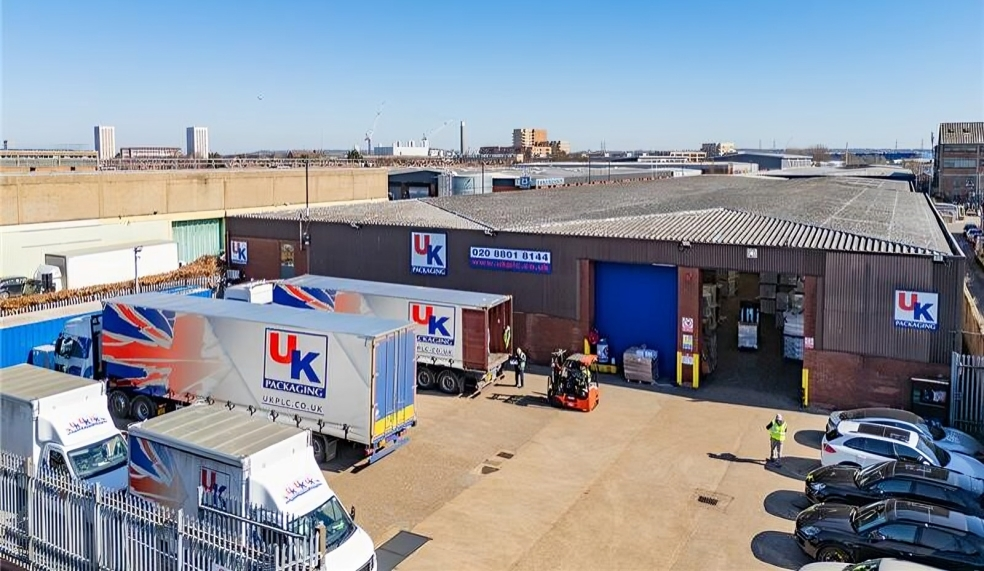
We hold agreed quantities of your cartons at our London site and release them against call-off orders, so you keep your supply secure without surrendering your own floor space.
Sustainability Now Sits on the Balance Sheet
Sustainability has become an important consideration in packaging decisions, with businesses increasingly focusing on recyclable materials, waste reduction and efficient packaging design. Extended Producer Responsibility changed that, and packaging choices now carry a direct financial consequence for obligated businesses.
Most of the cardboard boxes that UK customers order contain recycled fibre and go straight back into the recycling stream after use. Reducing over-specification helps as well; lighter, better-fitting packaging means less material, lower fees and fewer lorries carrying fresh air.
Our packaging review service examines your current process and flags exactly where that waste hides.
Choosing a Supplier
Judge any supplier of packaging boxes UK-wide based on four points.
- Range depth
- Stock availability
- Quality accreditation
- Technical advice
Certification such as ISO 9001 and ISO 14001 gives you assurance rather than false promises, and a supplier willing to talk you out of an over-specified carton usually proves worth keeping.
Call us on 020 8801 8144 or email sales@ukplc.co.uk with your product details and volumes, and our team will specify, quote and dispatch.
FAQs
Single-wall suits lighter goods with limited stacking. Double-wall handles heavier or denser contents, pallet stacking, and longer journeys. Share the product weight and shipping method with us, and we will confirm the right grade.
Internal dimensions are listed as length × width × depth. Measure the product, allow some extra space for protective packaging, then match the measurements against the listed box sizes.
Both. We supply single-bundle quantities through to full pallet loads, and regular buyers often move onto a stockholding agreement once volumes settle.
Usually, yes. A carton built around your product cuts void fill, reduces damage, and often lowers volumetric shipping charges enough to offset the unit price.